Eco House

  • Location:
    Bengaluru, India
  • Type of use:
    Residential
  • Year of construction:
    2016
  • Size:
    282 m²
  • Project sponsor:
    Ashok Lall
  • Principle of fail addressed:
    Uniform Architecture, Short-term Responsibility, Resource Ignorance, Social Ignorance

A Biodiversity Hotspot

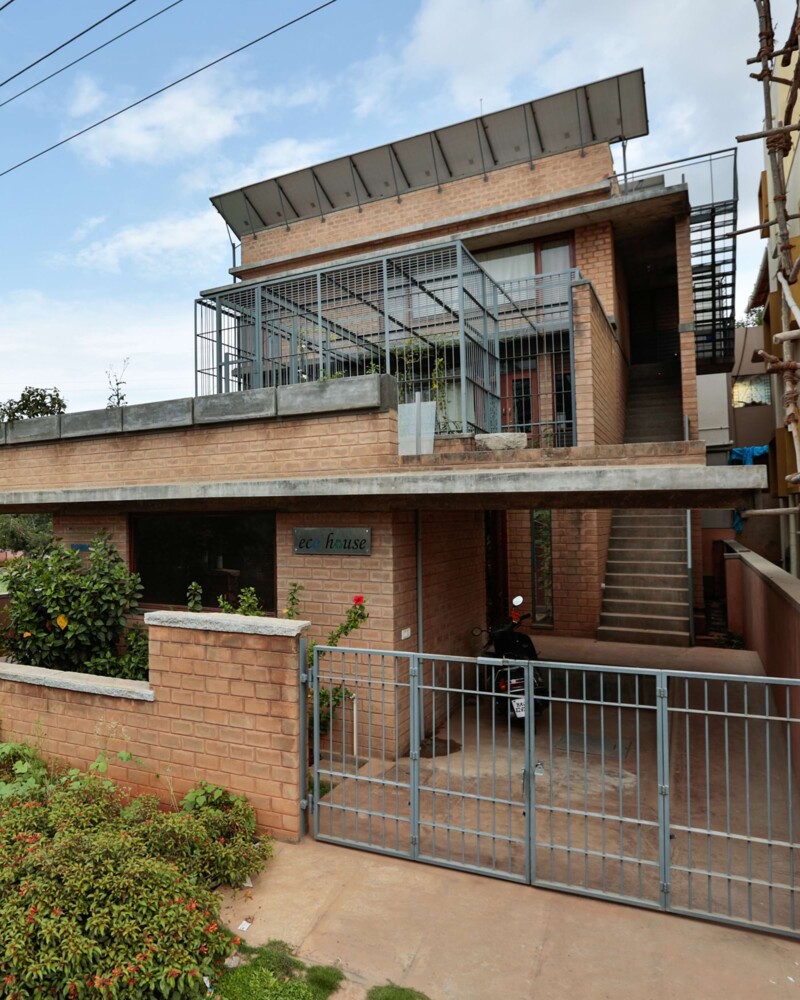
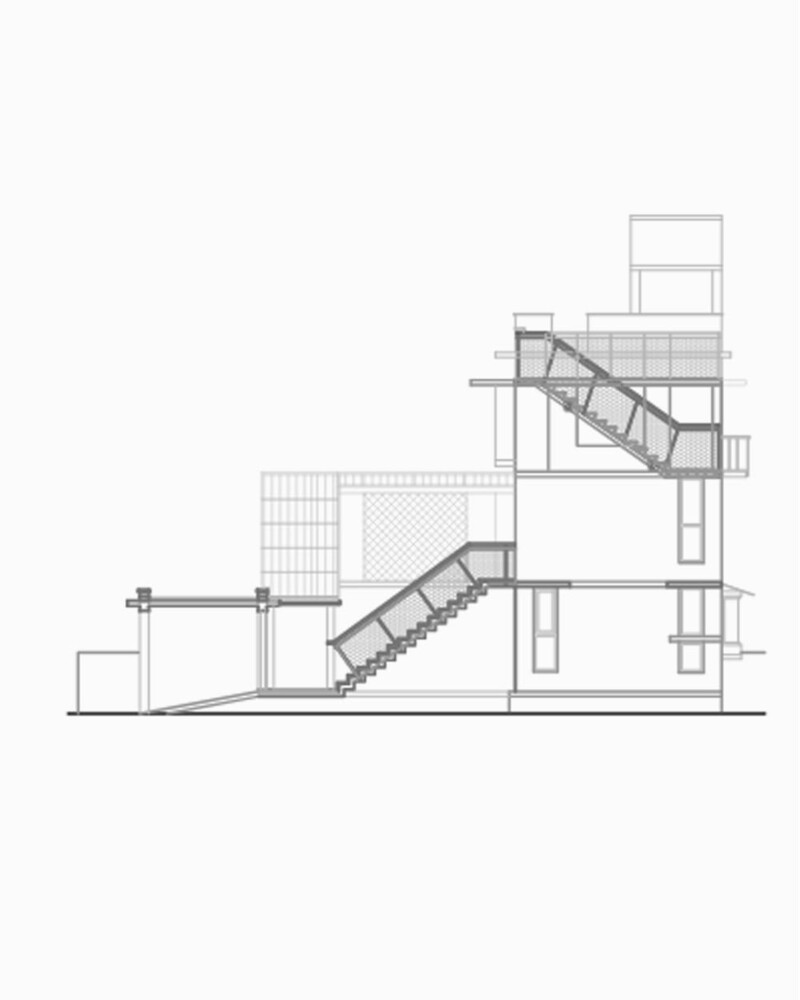
Eco-House is designed around a closed nutrient cycle based on waste recovery within the urban site. While rainwater serves the need for potable water, nutrients in the water from toilets and the kitchen improve the yield of rooftop farming. The house is spread across three levels, including a mezzanine and a terrace designed to grow food. It is designed to sustain life with the least resources. It provides workspace on the lower level and residential areas above .

Why SHIFT selected this project

  • Necessity: Designed as a self-sufficient urban residence, it addresses critical needs in water, waste, food, and energy in a rapidly urbanizing city.
  • Affordability: Comparable to conventional middle-income homes in cost, with significantly lower long-term operational expenses.
  • Simplicity and Appropriateness: Uses passive strategies, local materials, and climate-conscious layout to reduce HVAC reliance while ensuring comfort.
  • Sufficiency and Efficiency: On-site soil reuse, full water self-sufficiency, and nutrient recovery create a circular resource loop.
  • Scalability: Uses a well-tested, locally adapted earth construction method scalable across urban India.
  • Beauty: Emphasizes material honesty, ecological integration, and supports biodiversity - a modern yet rooted architectural language.
  • Unique Principles of Success: Integrates permaculture, mixed-use planning, and sanitation innovation through deep client collaboration and systemic thinking.
  • Limitations: Depends on user participation, region-specific soil knowledge, and technical acceptance by mainstream construction professionals.

Water Flows All Around

India receives maximum solar radiation from the south. The form of the building is designed such that the highest part of the building is on the south side of the plot, shading the rest of the house while bringing in light from the north, and keeping its spaces evenly lit throughout the day. Both basement rooms have courtyards to bring in daylight and allow ventilation. The office is located in the basement to keep it cool all day. The roof of the office has space dedicated to growing food, reducing the solar heat gain. The house has three different levels – basement, ground floor, and mezzanine. The basement has a summer bedroom, and the mezzanine is the winter bedroom, accounting for seasonal variations. The penthouse above the mezzanine has a higher ceiling with top-level ventilation to take the hot air out.

Rooftop and surface runoff water meet 100% of its occupants’ freshwater demand. The demand for other domestic needs, such as growing food or flushing toilets, is met with the water recovered from the bio-treatment systems. Unlike conventional STPs , these systems use zero energy. They treat ‚waste‘ water as nutrient-rich instead of polluted. The aim is to meet basic human needs within the home while drastically minimizing dependence on external resources. The philosophy of closing the nutrient cycle loop is evident in the meticulous attention paid to water management, waste recycling, and energy generation within the urban site.

The soil that was excavated for the basement yielded 150% of the materials of the compressed stabilized earth blocks needed for the house. The blocks were made on site, eliminating the need for transportation.


Passive Design Thriving On Bangalore’s Climate

The design of Eco-House is deeply contextual, responding directly to the local climate and soil conditions.Compressed stabilized earth block technology was researched, adopted, and adapted to soil in Bengaluru by IISc . Since then, the practice has extensively used earth bricks in the city, now for over 3 decades. The project helped spark wider acceptance for this method, and the practice has been involved in training and employing skilled labour. Even for this project, a new team of a labour contractor was trained, suggesting the promise of scaling these materials and methods, locally and globally..

Given the availability of suitable soil across the city and many parts of the country, the material supply chain is as efficient as it is reliable. Bangalore probably boasts the largest number of earth buildings in India, while its well-established annual rainfall pattern is well-suited to rainwater harvesting. The simple charcoal and sand-based water filters are easy to make and maintain. The moderate climate enjoyed by Bangalore makes it possible to integrate easy, inexpensive passive design strategies, reducing the energy demand.

Seen through a permaculture lens, the project aims for a single intervention that addresses multiple challenges simultaneously, from water scarcity and waste management to food security and energy independence.

Join our movement

Participants

Are you working on a project that follows the SHIFT philosophy or is committed to specific aspects of the initiative? Then send us your project. We are excited and look forward to receiving your submission.

Supporters

Do you want to become a part of this SHIFT movement and help to make global architecture more resilient, climate-conscious and culturally responsible? Then download the supporter logo and share it in your networks.